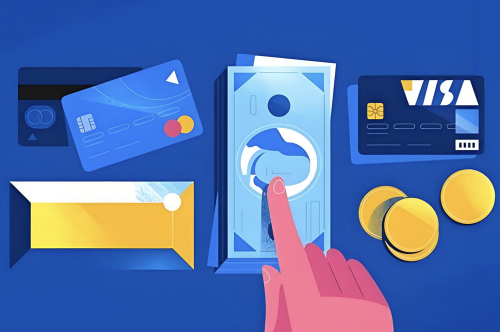
Unveiling 3D Secure(3DS):Enhancing Online Payment Security
In today's digital era of cross-border trade, the security of online payments is crucial. The emergence of 3D Secure (hereinafter referred to as 3DS) technology has made a significant contribution to ensuring the safety of cross-border transactions. As an advanced payment security mechanism, 3DS plays a key role by adding an extra layer of verification during the payment process, greatly reducing the risks of fraud and unauthorized transactions.

3DS is an online payment security authentication technology designed to protect online transactions by adding an additional layer of verification, thereby reducing fraud and unauthorized transactions. As a risk mitigation measure, 3DS helps lower chargeback rates and fraud rates, enhancing the security of online payments and protecting the interests of both consumers and merchants.
1. Differences Between 3DS Versions
3DS 1.0 was officially released by Visa International in 2001. The 3-Domain information exchange and verification process reduced the risk of credit card theft. However, the cumbersome redirect verification negatively impacted the consumer payment experience. To address this issue, EMVCo, the international chip card standardization organization, developed and released 3DS 2.0 in 2016. With standardized verification protocols, expanded transaction types, and improved payment experiences, major card networks quickly adopted the new version.
When consumers use credit or debit cards that support 3DS for online shopping, they are required to provide additional authentication information, such as a password or a one-time verification code, to confirm their identity. The 3DS service has different names across various card networks; for example, it is known as Verified by Visa (VBV) for Visa and Mastercard Secure Code (MSC) for Mastercard cards.

3DS 1.0 (Browser-dependent):
Cardholders are required to complete a one-time registration and activation of the 3DS service with their issuing bank before use. During transactions, they need to be redirected for verification, and must enter their password in both the verification window and the payment window.
3DS 2.0 (Supports Browser and App):
No redirection is necessary; dynamic authentication methods such as bio-metrics and token-based authentication are used on the payment page. Authentication can be performed through "non-payment authentication" (i.e., without purchasing goods). Issuers are allowed to collect extensive cardholder and transaction data (e.g., shipping address, customer device ID, previous transaction history, etc.) through the payment provider to make more accurate risk assessments.
As technology continues to evolve, 3DS is continuously improving. It adapts to new security challenges, enhancing the accuracy and efficiency of verification, some of the latest versions of 3DS employ more intelligent risk assessment mechanisms, flexibly adjusting the level of verification based on the specifics of the transaction, ensuring security while minimizing inconvenience to consumers.

2. Enhancing User Experience
For consumers, 3DS means a more secure shopping experience. When making online payments, 3DS initiates a unique authentication process that may require entering a password, receiving a verification code, or using other secure authentication methods. This effectively ensures that the transaction is being carried out by the consumer themselves, protecting their funds and preventing potential losses.
For merchants, 3DS is also a crucial safeguard. It helps reduce fraudulent transactions and lower the risk of chargebacks, thereby protecting the merchant's interests and reputation.In cross-border transactions,where network environments and payment scenarios are more complex and diverse,3DS provides a robust defense.
Implementing 3DS does come with some challenges.Compatibility issues may occasionally arise,as some older devices or browsers might struggle to implement 3DS.This necessitates continuous optimization and improvement to ensure broad compatibility.When designing the verification process,it’s crucial to balance convenience and security,ensuring that cumbersome steps do not negatively impact the consumer’s shopping experience.

Simplify the verification process
Minimize the amount of information and steps,avoiding cumbersome and complex processes that might cause user frustration.
Provide clear guidance
During the 3D Secure verification process,give users concise and clear prompts and instructions so they know exactly what to do.
Optimize interface design
Make the verification interface simple,aesthetically pleasing,easy to understand,avoiding visual clutter.
Ensure quick responses
Ensure the verification process is fast and smooth,reducing waiting times to avoid users losing patience.
Support multiple verification methods
In addition to traditional methods like passwords,consider offering more convenient verification methods such as fingerprint recognition and facial recognition,allowing users to choose based on their preferences.

ONERWAY holds licenses such as EMI in the UK,MSB in the US,and MSO in Hong Kong.It has passed PCI-DSS Level Certification and is one of the principal members of Visa and Mastercard.
As a leading cross-border payment company,ONERWAY ensures a high level of security for users'funds.The transaction security is significantly enhanced by combining a self-developed intelligent risk control system with third-party risk control systems,greatly reducing fraud risk.We provide secure,compliant,simple,and fast payment services.
As a leading cross-border payment company,ONERWAY ensures a high level of security for users'funds.The transaction security is significantly enhanced by combining a self-developed intelligent risk control system with third-party risk control systems,greatly reducing fraud risk.We provide secure,compliant,simple,and fast payment services.
For more information or if you encounter any issues during your operations,please feel free to contact us for consultation.We are dedicated to resolving your concerns!